Wednesday, May 22, 2013

BREAKING NEWS: Wild Parrots Reported in Upstate New York

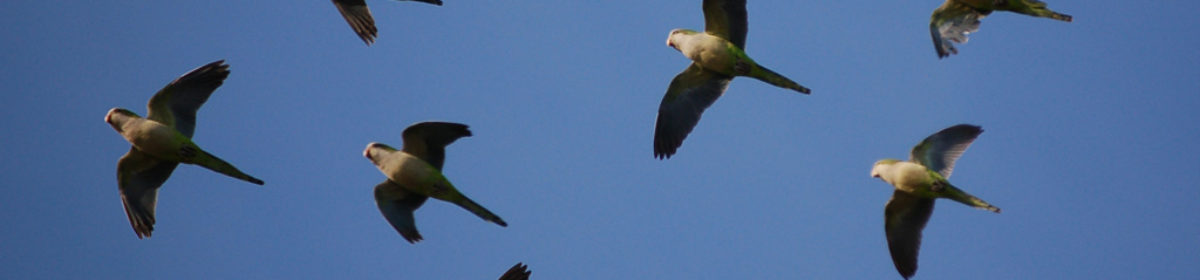
A correspondent in Middletown, New York, a town more than 50 miles away from New York City, reports that wild parrots have been sighted on the grounds of Middletown High School.  The parrots have been described as “cute” and “green,” which leads me to believe that they are Monk Parakeets (AKA Quaker Parrots), which are widely known to have a high “CQ” (Cuteness Quotient). They were also described as “unbelievably loud,” a known characteristic of Monks.

While no photographs are yet available of the upstate parrots, BrooklynParrots.com has analyzed satellite imagery and aerial photos of the site. While no nests are visible in these images, tall light poles of similar design to those seen in Brooklyn have been identified. These poles -- which are at least 40 feet tall and include the type of maintenance basket favored by the parrots as a nest substructure -- would serve as ideal nesting platforms for the parrots.

I personally have heard rumors of there being wild parrots “somewhere upstate” for years, but this is the first actual eyewitness account I am aware of.  Which leads to larger questions – how did these parrots get to Middletown? Was it a breakaway group moving North from Bergen County, or a mass escape from a pet store? (Quaker Parrots are legal to sell in New York State). How have the parrots managed to  evade the many avian predators in the area? I hope to have more information on the Middletown Wild Parrots in the near future – in the meantime this is cause for celebration for New York State wild parrot watchers.

Wednesday, May 15, 2013

NJ Parrots Shut Down Transformer, Causing Outage to 500

Early on the morning of May 8th, a wild parrot nest in Leonia, New Jersey caused a transformer to shut down, causing a 90-minute loss of electrical power to 500 PSE&G customers.

Repair crews quickly fixed the problem and power was restored by 4:30 AM.

PSE&G, like Con Edison, must keep an eye on the size of parrot nests, especially those located at the base of transformers, because it is possible for the nest to interfere with the operation of cooling fans located at the base of the transformer. The parrots like to build nests under this vent because the flow of warm air provides heat through the winter. Unfortunately this practice can cause the transformer to overheat when the weather gets warmer.

PSE&G, like Con Edison, has a "no kill" policy vis a vis the parrots. Offending nests will be removed, but the birds will be left alone, and alternative nest platforms can be constructed nearby in an attempt to woo the parrots away. Unfortunately, these are not heated, so the parrots cannot always be convinced to relocate.

For more on this story, visit this page: http://www.nj.com/bergen/index.ssf/2013/05/leonia_power_outage_caused_by_quaker_parrots_pseg_says.html


Tuesday, May 14, 2013

Green-Wood Cemetery Celebrates 175 Year Anniversary

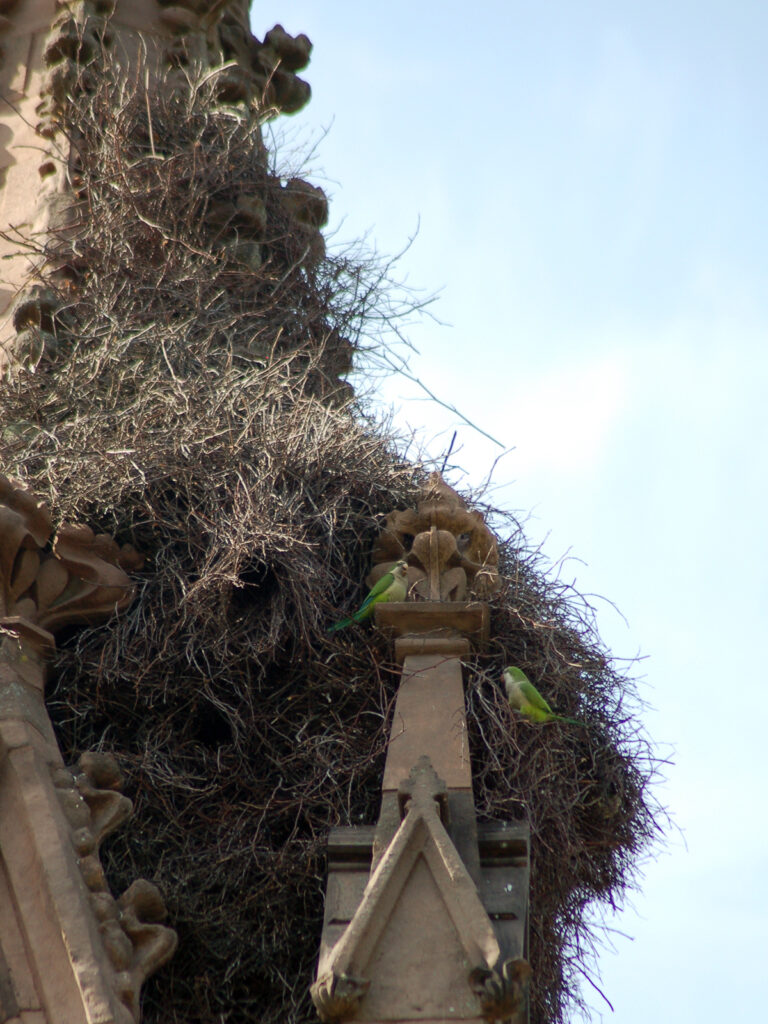
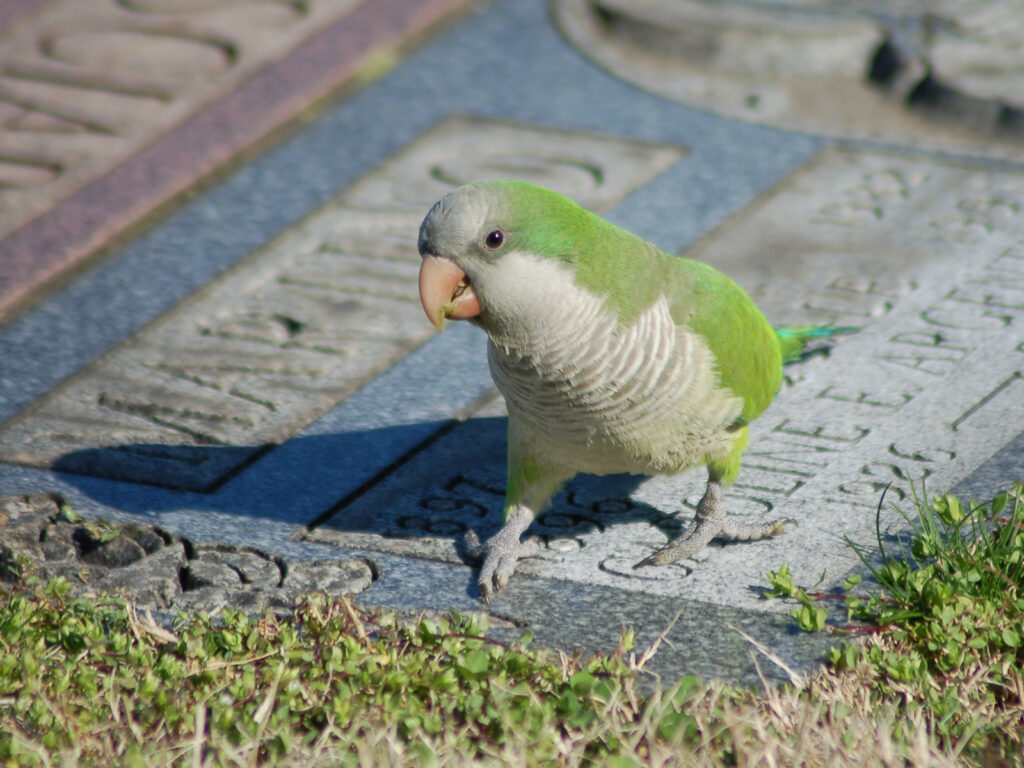
Green-Wood Cemetery is a spectacular, wild jewel of a place that for reasons unknown remains obscure and almost completely unknown to many New Yorkers. The Huffington Post ran a nice article by Ulat Ilnytsky on Green-Wood’s 175th Anniversary as a working cemetery. The Wild Quaker Parrots of Green-Wood are among its most spectacular features. These raucous parrots have only been on site since the 1960s, but they’re doing well (the management of the Cemetery likes them and looks after them) and should have a long and bright future ahead there.

Monday, April 22, 2013

Next Wild Brooklyn Parrot Safari: Saturday, June 1st, 2013

The Wild Parrots of Brooklyn
Attention bird watchers: the next Wild Brooklyn Parrot Safari is on Saturday, June 1st, 2013, at 11 AM. Please gather at Brooklyn College's Hillel Gate, which is at the intersection of Hillel Place and Campus Road.

How To Get There
Brooklyn College is easy to get to via public transportation. From Manhattan, take the Number 2 (7th Avenue IRT) southbound express to the end of the line. Walk one block Southwest on Hillel Street past Starbucks, and look for the main Brooklyn College gate.

The tour begins at the entrance at 11:00 AM sharp. Please give yourself extra time because the MTA is doing construction on their lines during weekends. Driving instructions are at Brooklyn College's main Web site. Parking is easy to come by in the neighborhood. NOTE: the entrance to Brooklyn College has relocated due to construction. The new temporary entrance is a few steps to the north along Campus Road - we'll meet there.

Please e-mail me if you want to attend. This allows me to notify you if the safari for some reason must be cancelled. Note: there is no rain date. I do not cancel the tour unless the forecast is for sustained inclement weather in which birds will not fly. 

What We Will Do
We'll take a walk through the Brooklyn Parrots' main colony area -- the wild parrots' "Ellis Island," where the parrots were first spotted in the 1970s. I'll tell you about the parrots' history in Brooklyn and you can ask questions. We'll listen for the birds and try to determine where they're hanging out. We'll also inspect that tall light poles to mark the progress of the parrots' nest reconstruction project. Be ready for photo opportunities.

What to Bring/What to Wear

Please bring a photo ID (this is required by Brooklyn College security). Bring binoculars and a camera. Please feel free to wear anything except bright orange. Wild Quaker Parrots freak out when they see this color..
The Safari is Free to the Public
The Wild Parrot Safari is free. You may donate bird seed, however. Bring some bird feed and other treats. See you in wild, exotic Brooklyn! Steve Baldwin, Webmaster, BrooklynParrots.com
steve@brooklynparrots.com

Monday, April 08, 2013

New Song: Walking 99 Miles (The Longest Musical March on U.S. Soil)

Last year, Brooklyn Parrots' Steve Baldwin took off across the country to celebrate Woody Guthrie's 100th Birthday, taking part in the 99 mile foot march which set forth from Philadelphia's Liberty Bell for New York's Zuccotti Park. The song embedded below commemorates the trials of a march "on a road so hot that our brains began to boil." Steve, by the way, only made it 16 miles on the road to Zuccotti before falling victim to West Nile Disease on the outskirts of Trenton. I am told that this event was the longest musical march on U.S. soil.

Thursday, March 28, 2013

32 Captured African Grey Parrots Returned to Wild

Image source: BlogsThatPetPlace.com
The African Grey Parrot is one of the most intelligent, complex creatures in the animal kingdom, and it is also one of the most endangered. The Grey's population is declining in just about all of the areas of Africa in which it resides, and trafficking is rampant. But the government of Uganda, cooperating with a wide range of private and public authorities, were able to release 32 birds confiscated from the criminals. 32 birds may not seem like a lot, given the widespread poaching of the Grey, but it signifies that at least one African government takes conservation of these remarkable birds seriously. You can read more about this remarkable turnaround at Blogs.ThatPetPlace.com.


Monday, March 25, 2013

"I Found a Baby Bird - Now What?"

Spring is a wonderful time of rebirth and rebloom, but it's also the time when baby birds have misadventures and go astray from the safety of their nests. "I found a baby bird -- now what do I do?" is a question I get a lot via e-mail this time of year. To answer this question here's a helpful, illustrated PDF flowchart written by Shannon K. Jacobs. You can read, download, and print it here: http://www.nwrawildlife.org/sites/default/files/FoundBird.pdf

Wednesday, March 20, 2013

Chicago's Wild Parrots Celebrate 40 Years in The Windy City

Photo credit: bp5131/Chicagoist
You've got to give the Chicago Parrots credit -- they've lived for 40 years now in Hyde Park, a neighborhood that is literally crammed up against Lake Michigan -- the source of some of the roughest, coldest weather in the Northern Hemisphere. But the Chicago birds -- like their Brooklyn brethren -- have survived nicely, through rotten weather, multiple eradication efforts, and the wear and tear of living in a big, world-class city, and an article on the Chicagoist Web site provides a nice tribute to these tough, enterprising, resiliant birds.

I was lucky to get out to Chicago in 2006 to photograph these remarkable urban survivors - you can read my photo-essay here: http://www.brooklynparrots.com/2006/05/photo-essay-fabulous-wild-parrots-of.html

Friday, March 08, 2013

San Diego, CA is Teeming With Wild Parrots

Image Source: SDNews.com
Very interesting story in the San Diego Community Papers this week about the wild parrots that have taken up residence there. There are two theories about the parrots' appearance in San Diego: first, that unwanted pets escaped and formed breeding pairs; the other that the parrots may have flown  up from Mexico to escape the deforestation of their native homeland. Either way, the San Diego parrots appear to making a good go if it in that fair city, and they apparently were a major hit at the San Diego Bird Festival when they swooped in on the proceedings on their own, startling and delighting parrot-fanciers.

New song from Brooklyn Parrots Studios: "The Freedom Cage"

Here's a new number commemorating the valiant protesters who -- for a time -- sought and received sanctuary from Federal authorities in the form of "The Freedom Cage," a special protected area set up at Federal Hall where First Amendment rights would be respected. This latest song is part of a series commemorating Occupy Wall Street.

Thursday, February 28, 2013

A Shout Out To Mr. Rogers

Major shout out this week to Fred Rogers, who passed on ten years ago. Better known to the world as Mr. Rogers, Fred provided friendship, wisdom, and a fatherly presence to millions of kids on his long-lived PBS show, "Mr. Rogers' Neighborhood." Here is Fred's goodbye to the world, recorded shortly before he passed on. I hope you find it as moving as I do.


Wednesday, February 27, 2013

Foster Parrot's Karen Windsor on the Plight of Pet Parrots

In this video, created by the Providence Journal, Karen Windsor, Executive Director of Foster Parrots, speaks about the sad situation created by "parrot mills"-- which breed thousands of animals each year for commercial reasons, creating a chronic problem of homelessness for birds left behind by their owners. Karen speaks with authority: her organization runs a Rhode Island-based sanctuary where such "discarded" birds can find refuge and hopefully be paired with responsible human owners. 

The suffering of pet birds has been exacerbated by the real estate meltdown and foreclosure crisis; in a recent press release, Foster Parrots announced that it had taken in a cockatoo abandoned by its owners in a foreclosed home.   


Monday, February 25, 2013

New Song: The Man in the Box

As you may know, I spent some time last year providing music for Occupy Wall Street. performing and documenting the music that was being played at Zuccotti Park. Today, Zuccotti is silent, but the myths of what happened there have a life of their own, and I enjoy committing what I saw in song. To wit, a new song is called "The Man In The Box," and tells -- in very short fashion -- the story of David Everitt-Carlson, a street artist who arrived early at the encampment, made a stand, and endured the long dismal months that followed. You can learn more about David's project, which is called ITOMB ("I Think Outside My Box" on his blog, which is here: http://ithinkoutsidemybox.blogspot.com/
The Man in the Box by Stephen Carl Baldwin


Sunday, February 24, 2013

Some Good News From South Africa About the Cape Parrot

There's been so much sad news from South Africa recently that I wanted to post a heartening story concerning the Cape Parrot, a severely endangered species that's been reduced to fewer than 1,000 individuals in the wild due to habitat loss. Below is a video from the site of National Geographic; it shows the first footage of a Cape Parrot feeding in a high tree canopy. What makes this footage inspiring is that the Cape Parrot is South Africa's National Parrot, and the Yellowwood tree the bird is feeding on is SA's national tree. Let's hope this augers well for the future of the bird.

The entire article is available on NatGeo's site.

Conservationists have been making headway preserving the species, which is further endangered by an outbreak of Psittacine Beak and Feather Disease. You can support the effort yourself by visiting the Cape Parrot Project on Facebook and The National Geographic's Youtube Channel to familiarize yourself with the issues. Donations may be made to The World Parrot Trust.


Friday, February 22, 2013

Wild Parrots Delay California Road Construction Project

According to The Gazettes Newspaper of Long Beach, California, a recent road repaving project in Belmont Shore was dealt an unexpected hurdle when a flock of wild parrots was discovered nesting in one of the Red Iron Bark trees slated for removal to fix the road (apparently the tree roots were causing bumps in the old roadway).  The imbroglio began when local resident   Carol Kane objected to the tree removal, noting that "the parrots work as greeters" during the daytime and referencing the fact that the street in question (Lois Lane) was almost renamed "Parrot Lane" years ago. Apparently the Audubon Society has been consulted and many hope the tree can be saved.


Thursday, February 21, 2013

St. Louis Today: Volunteers Foster Homeless, Abused Caged Birds

I don't know what it is about St. Louis, but some of the kindest hearted people in America seem to live there, and I was impressed when, several years ago, I gave a talk about parrots at a St. Louis bird fair and met some of the people doing good work with animals -- both wild and captive -- in that city.

Here is a very good article from St Louis Today.com highlighting the work of Star St. Louis Avian Rescue Inc. This group specializes in providing therapy -- both physical and psychological -- for parrots who deserve a better life after long years of companion service to humans. Bringing an abused bird back from the is hard work, but is so rewarding when the poor animal begins to respond normally again. This article presents several instances of such happy events.

Stars is a worthy effort that reinforces the idea that it is always better to adopt a bird than to buy one. You may view Stars' web site here: http://www.staravian.org/


Tuesday, February 19, 2013

Could Wild Parrots Take Over New York City?

Myiopsitta Monachas -- the world's Urban Parrot.
A new science fiction novel written by Sean Ferrell called "The Man in the Empty Suit" imagines a world of 2071 in which people have largely abandoned New York City, leaving its buildings vacant for wild parrots to inhabit.

I haven't read the book; only a book review on the Web site of the Minneapolis Star Tribune, so I cannot comment on the research used by the author to substantiate his claim that wild parrots could credibly  inhabit so much real estate in so little time.
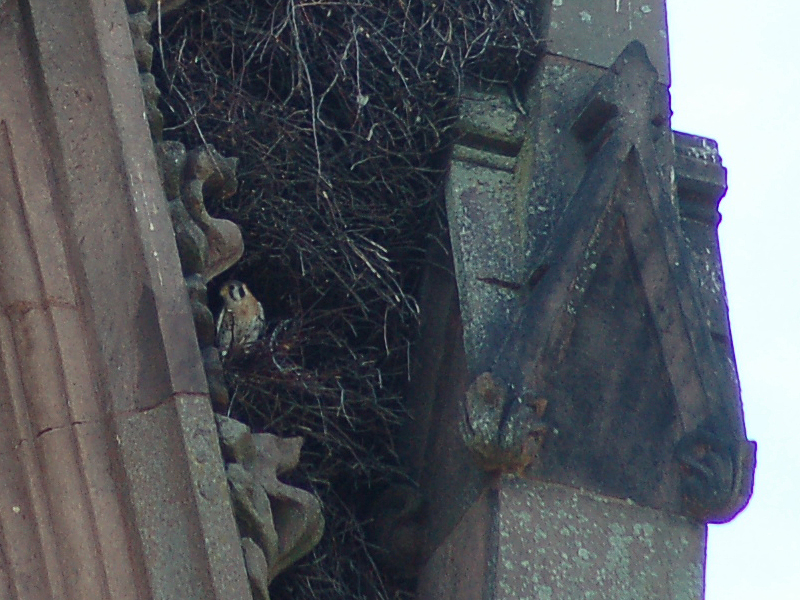
Still, I have almost no doubt that there would be no more likely candidate to inhabit New York's canyons of stone than the Monk Parakeets (AKA Quaker Parrots) we see every day in Brooklyn. These birds are industrious, tenacious, and hard to evict under any circumstances. While I do not wish to ever see a day when Manhattan is empty of people, the prospect of parrots inheriting the place leaves me feeling more amused than terrified. 

Wednesday, January 30, 2013

San Francisco Has a Wild Parrot Sports Team: Should Brooklyn?

Meet the SF Parrots
Happily, San Francisco now has a soccer club named after its famous wild parrots called the Northbeach Wild Parrots (AKA SF Parrots). The team's motto is "soccer at its wildest;" its uniforms are bright green like the  wild conures made famous in Mark Bittner's charming film, The Wild Parrots of Telegraph Hill.

The SF Parrots are in the CYSA league and rostered 19 players in the 2012 lineup. These kids are no slouches; in September they won 1st place in the U16 group of the Golden Gate Invitational Tournament.

Should Brooklyn have a Parrot-themed soccer team? Maybe. When sports teams -- or automobiles for that matter -- are named after animals, these animals are usually aggressive. Hawks. Bears. Sharks. Naming a team after a prey species -- a pigeon, starling or parrot -- would be courting failure on the field.
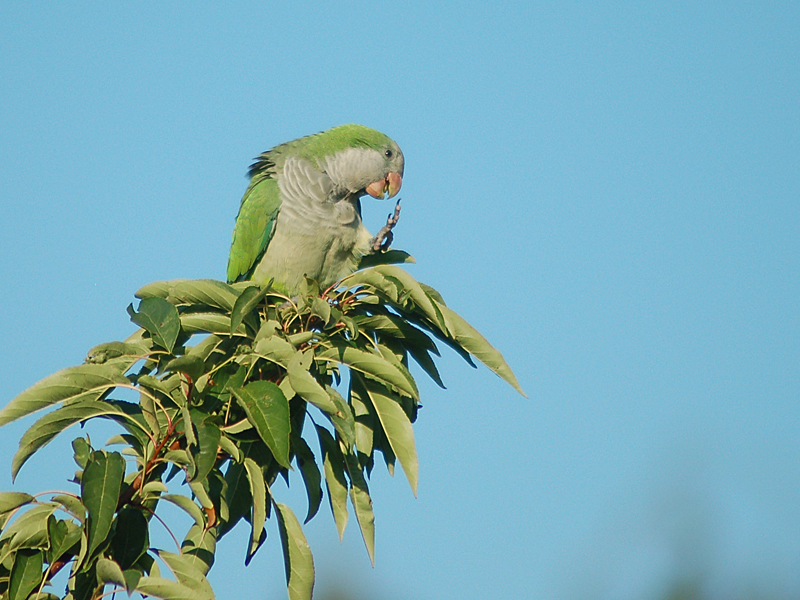
On the other hand, the parrots we find in Brooklyn have been known to be aggressive. And they're as tough or tougher than the SF parrots due to NYC's violent weather, as proved recently when the parrot nests survived Hurricane Sandy.

If anyone in Brooklyn is interesting in forming a parrot-themed soccer team, please note that the two best places to play ball and see wild parrots at the same time are at the athletic field at Brooklyn College (where the monthly safaris happen) and in The Dust Bowl/Quaker Parrot Park in Bay Ridge.

Go Parrots!

Monday, January 28, 2013

Back in Zuccotti Again...

Brr -- it's too cold to play outside! But January/February is the time when it's good to hunker down and record demos! Here's one I wrote after I walked by Zuccotti Park last week -- birthplace of Occupy Wall Street -- on my way to a wedding at Federal Hall. The park was empty -- just a couple of tourists and about 40 pigeons, and that made me sad and more than a bit sentimental for the glory days...
Lyrics:

Back in Zuccotti again
But where the heck are my friends?
Has anyone seen the Man in the Box?
Officer Winsky or the Hipster Cop?
It was a while ago
But I can't let go
So I'm sitting alone with a pigeon on my hand
And I'm back in Zuccotti again

Back in Zuccotti again
But where the heck are my friends?
Has anyone seen the Ladies Who Knit?
The guy with the sign that says "it's fucked up and bullshit"?
It was a while ago
But I can't let go
So I'm sitting alone with a pigeon on my hand
And I'm back in Zuccotti again

Thursday, January 17, 2013

Parrot Drives Car

BirdBuggy - a beak-directed, robotically-assisted, parrot-driven vehicle that was designed to keep a pet African Grey amused, has taken the Internet by storm. Some question the wisdom of taking this much trouble to keep a parrot amused. After all, African Greys can fly -- so why do they need to drive? Aren't there less elaborate ways of keeping one's parrot amused?

Sure. But driving is fun -- and Pepper the parrot, who drives the BirdBuggy, seems to be having plenty of it.

Let us praise Andrew Gray, of the University of Florida, who created the BirdBuggy, and Pepper, its intrepid driver. May the BirdBuggy land Andrew a job as well as a medal for creating 2013's first parrot viral video.